
You’re likely familiar with Form I-9—the employment eligibility verification form that’s been a staple in the hiring process for years. Form I-9 is used to confirm that individuals hired are authorized to work in the U.S.
While the form may seem routine, changes over the past couple of years have made staying compliant more important than ever. In August 2023, a new version of Form I-9 was introduced, offering streamlined sections and allowing employers enrolled in E-Verify to verify documents remotely.
These updates are meant to simplify the process, but they also come with new requirements that need to be adopted to avoid compliance risks, fines, and penalties.
Recent Changes to the I-9 Form
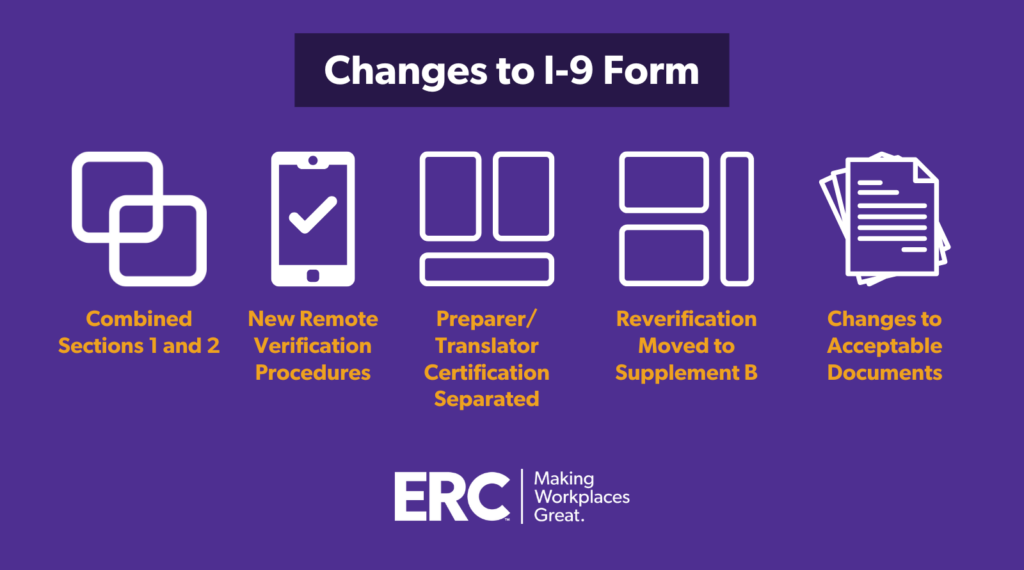
The latest version of Form I-9, introduced on August 1, 2023, includes several updates that you should be aware of. Here’s a quick summary:
- Combined Sections 1 and 2: Previously, these sections were on separate pages, but now they’re on a single page.
- New Remote Verification Procedures: For employers using E-Verify, you now have a permanent option to verify documents remotely, but this comes with a new checkbox that must be checked in Section 2 to indicate remote examination.
- Preparer/Translator Certification Separated: The Preparer/Translator section has been removed from the main form and placed into Supplement A, which now needs to be completed separately when applicable.
- Reverification Moved to Supplement B: Reverification and rehire processes now require employers to use a separate Supplement B form instead of the main I-9.
- Changes to Acceptable Documents: The Lists of Acceptable Documents now includes updated information on receipts and automatic extensions for Employment Authorization Documents (EADs).
Sound complicated? If you’re not familiar with the I-9 form, let ERC help. We can review your current employee I-9 forms and provide a detailed action list for easy, worry-free remediation.
Risks of I-9 Noncompliance
When it comes to I-9 compliance, the risks of noncompliance are too significant to ignore.
Fines for Form I-9 violations have steadily increased, with penalties for paperwork errors ranging from $281 to nearly $2,800 per violation, and for intentional violations, fines can climb as high as $27,000 per instance (and by the way, they’re likely to increase in 2025).
And it’s not just about the financial penalties—audits from the Department of Homeland Security (DHS) are becoming more frequent, with a noticeable increase in I-9 inspections. Waiting until 2025 to audit I-9 compliance could make your organization susceptible to a surprise inspection.
Given the heightened enforcement and the complexity of the recent changes, it’s easy to miss something small that could lead to large penalties. That’s why now might be the right time to consider an I-9 compliance audit. It’s better to uncover any gaps than risk an audit.
How to Avoid I-9 Penalties
To avoid I-9 penalties, an I-9 compliance review can help you identify any errors or inconsistencies. Here’s what we look at:
- Identification of Errors and Inconsistencies: Review existing I-9 forms for any incomplete or incorrect information, such as missing fields, incorrect document verification, or outdated versions of the form.
- Checking Compliance with the Latest Regulations: Verify that you’re using the most recent version of Form I-9 and that all forms are completed according to the new requirements introduced in August 2023.
- Document Retention and Management: Check that all I-9 forms are being properly stored and retained for the required timeframes (either three years after hire or one year after termination) to ensure compliance with DHS regulations.
- Detailed Action Plan for Remediation: Provide a comprehensive list of necessary corrections and steps to take so that all issues are addressed.
By staying on top of the latest I-9 changes and conducting regular audits, you can protect your business from costly penalties and create a smooth, compliant hiring process.