

Most organizations find that their performance review process is broken and faulty process in their organization. Nobody enjoys it, everyone struggles to do it well, it’s inefficient, and it often fails to do what it ultimately intends to: improve, enhance, and recognize performance.
New Pay Adjustment Projections Line Up With 2012 Data

Based upon the results of the 2013 ERC Pay Adjustment & Incentive Practices Survey, many Northeast Ohio employers are approaching their compensation decision making plans from a very similar, if not slightly more fiscally conservative viewpoint as in 2012.
Religion at Work: A Guide for Employers

In 2013, there had been a number of charges filed by the Equal Employment Opportunity Commission (EEOC) involving religion in the workplace. As workplaces become more religiously diverse, it may be a good time for your organization to review its practices relative to the issue.
Workplace Dress Codes: Setting Expectations

As temperatures rise and the office starts to feel sparse with employees out on summer vacations, you may notice another physical change around the office- in how employees are dressed. While many organizations are already operating with relatively casual dress codes, summertime clothing choices can sometimes push the limits of those policies.
5-Step Checklist to Protect Against Sexual Harassment Liability

Sexual harassment lawsuits continue to make up a large percentage of cases filed by the Equal Employment Opportunity Commission (EEOC) and many of the recent cases filed against employers. In addition, digital sexual harassment has become a more common form of sexual harassment through texting, email, and other electronic forms of communication.
FMLA Intermittent Leave: 3 Ways to Manage It

Intermittent FMLA leave can be extremely challenging for employers to manage. Fortunately, there are opportunities in the FMLA process which allow you to carefully manage this type of leave more effectively. Here are 3 ways to manage intermittent FMLA leave’s major challenges.
Your Company’s Organizational Health: 4 Key Elements

Organizational health is the latest buzzword in business, but what does it mean, and how can you tell if you organization is “healthy”?
Captain America Comes to NEO: 5 Ways Employees Can Battle the Traffic

Captain America has come to Northeast Ohio, and the filming has likely already resulted in a ton of traffic headaches for your workforce and organization…tardiness, lost productivity, frustration, and the list goes on. With traffic at a standstill in Northeast Ohio due to the temporary closing of the Shoreway over the next two weeks, some local organizations are allowing affected employees a bit more flexibility than normal.
Beyond FMLA: Other Leaves of Absence
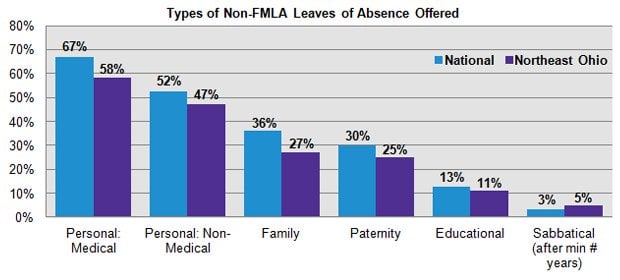
Approximately 76% of Northeast Ohio organizations provide benefits under the FMLA, with larger organizations (those over 100 employees), offering benefits with an unsurprisingly much higher frequency. These numbers put the region just slightly below the national sample reported by the 2013-2014 Policies & Benefits Survey – by about 5%.
7 Ways to Create a Happier Workforce

One of the most popular topics in the workplace these days is employee happiness. Happier employees are more successful employees, and as a result, researchers are finding that happiness makes business sense. Fostering both personal and professional happiness in the workplace can help your organization become more effective.
Top 4 Critical Skills Employees Need to Develop

In its Critical Skills Survey, the American Management Association (AMA) unveiled the four most critical workforce skills that need to be developed. Many of these skill gaps are also extremely common among the organizations we serve at ERC. Here’s an overview of the top four critical skills as well as recommendations on how to close these gaps through training and development in your organization.
Demand for Technical Skill Sets Help Deliver Strong IT Salaries
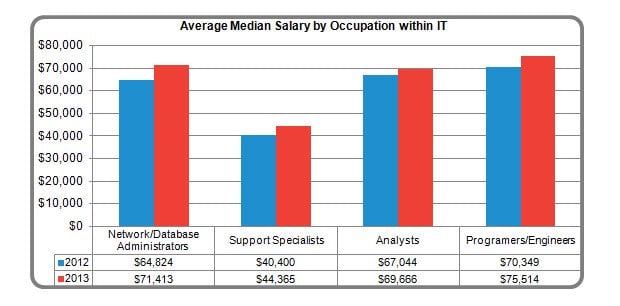
Information Technology (IT) continues to be an area of exceptional growth in the job market, both nationally and locally. Using data from the 2013 ERC Salary Survey, the average median salary growth of various occupational categories within IT, as set by the Bureau of Labor Statistics, can be seen below. The positive salary growth this figure illustrates is unsurprising when two key factors are considered.